
Define the user journey and carrying requirement
Custom bags and luggage should be developed around what users carry, how often they travel and where products encounter stress. A promotional tote, commuter backpack and checked suitcase need different materials, hardware and validation plans. Define the target user, sales channel, service expectations and intended price positioning before requesting quotations. This gives suppliers a practical basis for proposing construction rather than simply copying a reference image.
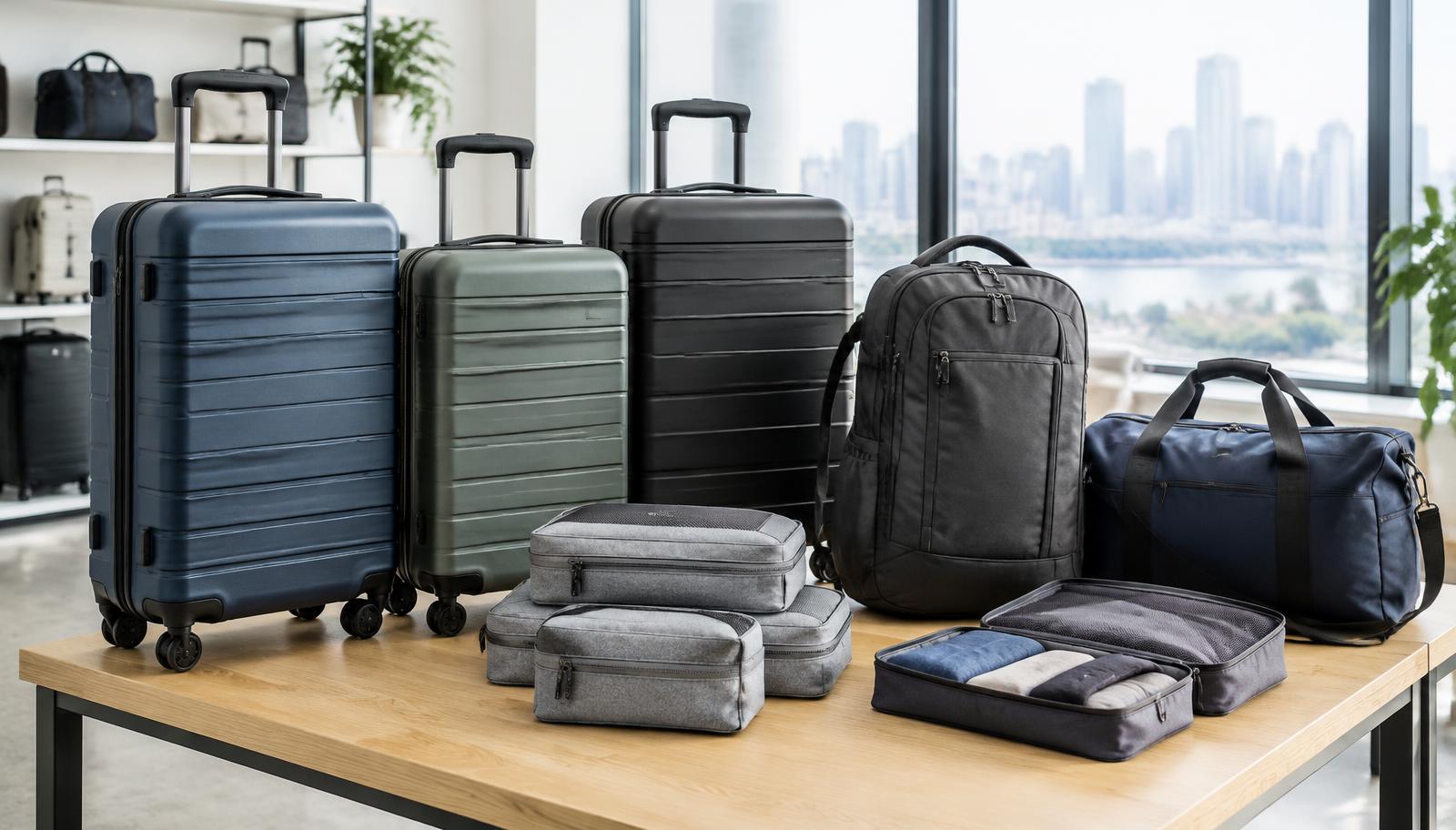
Create a product matrix covering external dimensions, usable capacity, empty weight, recommended load and compartments. Identify laptop sizes, bottle pockets, document access and other functional requirements precisely enough to test. For luggage, distinguish body measurements from overall dimensions including wheels and handles. Avoid universal cabin-acceptance claims, because airline restrictions vary and can change independently of the product design or its published dimensions.
Control fabrics, shells and hardware in the bill of materials
Specify each main fabric by fiber composition, construction, weight and relevant finish rather than a marketing name alone. Denier describes yarn linear density, not complete fabric durability or waterproof performance. Linings, foam, reinforcement sheets, thread, binding and webbing also require defined specifications. Request evidence for recycled-content claims and verify that the documentation applies to the material actually supplied for the order.
For hard-shell luggage, identify the polymer specification, shell construction and agreed thickness controls instead of accepting a broad material label. Define zipper construction, sliders, buckles, wheel assemblies, telescopic handles and replacement components. Attractive hardware is not evidence of suitable load or cycle performance. Record approved alternatives and require authorization before any material, trim or component substitution, including changes presented as improvements.
Qualify manufacturers for the processes your design needs
Check whether the supplier specializes in sewn bags, molded luggage or assembled travel accessories. Capability in one category does not automatically establish competence in another. Review pattern development, cutting, stitching, molding where relevant, assembly and final inspection arrangements. Identify subcontractors handling printing, embroidery, lamination and specialized components, then decide which operations need additional verification or technical review before production approval.
Compare company names across registrations, quotations and payment documents, and establish who actually manufactures the goods. Ask for records relevant to the proposed product rather than accepting a general equipment list. Source & Brand coordinates sourcing, OEM/ODM development, private label programs and supplier verification, but it does not own factories or issue inspection certificates. Qualified laboratories and inspection providers should perform their respective specialist services.
- Send the same technical brief to shortlisted suppliers.
- Verify identities, process capabilities and subcontracting arrangements.
- Resolve specification differences before comparing quotations.
Use sample gates to settle fit and branding
Begin with a prototype that tests shape, pocket access, carrying comfort and packing efficiency. Fit products with representative contents instead of relying on a capacity claim alone. Check strap adjustment, handle clearance and zipper access when the product is loaded. Record corrections on annotated drawings or photographs so the next sample resolves specific questions rather than repeating a subjective review without an agreed baseline.
Approve colors against physical references using an agreed viewing method, especially when fabrics, molded parts and metal finishes must coordinate. Specify logo position, embroidery density, print registration and label placement tolerances. Decoration can change fabric behavior or create weak points, so examine the decorated construction as well as the blank material. Confirm artwork permissions and ownership of commissioned patterns, molds and design files before production.
Example
Illustrative backpack sampling decision
Illustrative numbers: a buyer develops a 600-unit backpack order for a stated 12 kg carrying load. The first prototype fits correctly but shows seam distortion during the agreed loaded-handle test. The buyer approves added reinforcement only after the revised sample passes, then incorporates the detail into the controlled specification.
Create a risk-based compliance and durability plan
Build the compliance review around destination markets, user age, materials and intended claims. Restricted substances, labeling and requirements for children’s products may apply differently across ranges. Products with batteries, charging functions or electronic tracking features introduce additional safety and transport questions. Ask qualified advisers to identify applicable obligations instead of treating a generic supplier statement as a complete assessment of the finished product.
Translate expected use into agreed methods, loads, conditioning and pass criteria. Depending on the design, testing may include seam strength, strap attachment, zipper cycling, abrasion, colorfastness, wheel endurance and loaded drops. Review shell impact performance at conditions relevant to the intended use. Water-resistant fabric does not make the finished bag waterproof, because seams, closures and other openings can still admit water.
Link reports to the product reference, component specifications and tested configuration. If the supplier changes a wheel assembly or coating, assess whether earlier results still support the claim. Development testing establishes a baseline but does not remove the need for production controls. Retain records and representative samples so later failures can be investigated against the approved construction and its documented revision.
Negotiate minimums, ownership and landed economics
Request separate prices for the product, decoration, tooling, samples and packaging. Minimum quantities may apply by style, fabric color, trim finish or logo method, so determine which constraint drives each minimum. Clarify excess-material commitments and responsibility for unused branded components. A lower unit price can become expensive if it requires unwanted inventory or prevents changes that the buyer needs after launch.
Compare landed cost using consistent quantities, packing assumptions and a named Incoterm with its location. Products may ship compressed, nested or fully formed, changing both freight volume and damage risks. Include testing, inspection, duties and destination handling in the commercial model. A qualified customs broker should advise on classification and import treatment; Source & Brand coordinates logistics but does not act as a customs broker.
Inspect production against measurable release criteria
Schedule checks early enough to correct cutting, stitching or component problems before the entire order is assembled. Verify incoming materials against approved references and monitor high-stress operations such as strap reinforcement and wheel mounting. Define cosmetic limits with photographs covering shade variation, stitch appearance and surface marks. Agree sampling and escalation rules while recognizing that random inspection cannot guarantee every unit is defect-free.
Inspect pocket interiors, lining attachment and hidden seam allowances as well as visible panels. For wheeled luggage, verify wheel alignment, handle locking and smooth operation under the specified load. Establish a disposition process for failed lots, including containment, rework evidence and appropriate reinspection. Clarify who can authorize shipment release, and do not let delivery urgency override unresolved safety or functional failures.
Production release checklist
- ✓Drawings and component specifications are approved.
- ✓Reference samples establish fit, color and workmanship.
- ✓Required evidence matches the finished configuration.
- ✓Functional tests cover relevant moving parts.
- ✓Packaging, traceability and corrective-action responsibilities are documented.
Validate packaging and support repeat orders
Check packaging against the actual route, including warehouse handling and parcel delivery where relevant. Protect exposed hardware and prevent dye transfer, compression damage and abrasion between nested products. Confirm moisture-management needs and ensure products are dry before packing. Verify carton dimensions, weights and stacking arrangements against the final packed configuration rather than relying on estimates made before samples and accessories were finalized.
Agree access to replacement wheels, handles or other serviceable parts and confirm compatibility across production batches. Categorize complaints so zipper failures, torn seams and transit damage can be analyzed separately. Use findings to revise construction or packaging before replenishment. Maintain lot identification and written change approval so a successful first shipment becomes a repeatable program rather than an isolated match to an attractive sample.
Create a load and wear test plan around intended use. A promotional tote, a laptop backpack and checked luggage experience different stresses. Identify handle attachment, zipper cycling, seam strength, wheel function and fabric abrasion as applicable, then agree methods and acceptance criteria with the supplier and testing specialist. Check the assembled bag with realistic contents rather than testing only fabric swatches. Confirm whether lining, foam and hardware match the approved bill of materials. A strong outer fabric cannot compensate for weak attachment points, and a sample made with premium hardware may not represent the quoted production configuration.
Frequently asked questions
Should a buyer choose OEM or ODM development?
ODM can shorten development when an existing design meets the brief and usage rights are clear. OEM offers more design control but generally requires additional pattern work, sampling and specification management.
Does higher fabric denier guarantee a stronger bag?
No; fiber type, weave, coating, seams and reinforcement also affect performance. Compare finished constructions using methods relevant to the intended load and environment.
Can luggage be guaranteed to meet every cabin limit?
A universal guarantee is not a sound marketing basis. Publish measured overall dimensions and advise customers to check the requirements of their airline and ticket.
How should recycled-material claims be supported?
Request evidence appropriate to the exact claim and supply chain, then verify its scope. A supplier-level certificate does not automatically establish recycled content in every finished product.
What happens when production fails inspection?
Hold shipment while the parties establish the affected quantity, cause and corrective action. Require documented rework or replacement and suitable verification before authorizing release.
Key takeaway
Successful bag sourcing depends on a controlled bill of materials, useful sample gates and tests reflecting actual carrying conditions. Align supplier capability, commercial terms and release requirements before ordering, then preserve traceability through replenishment.