
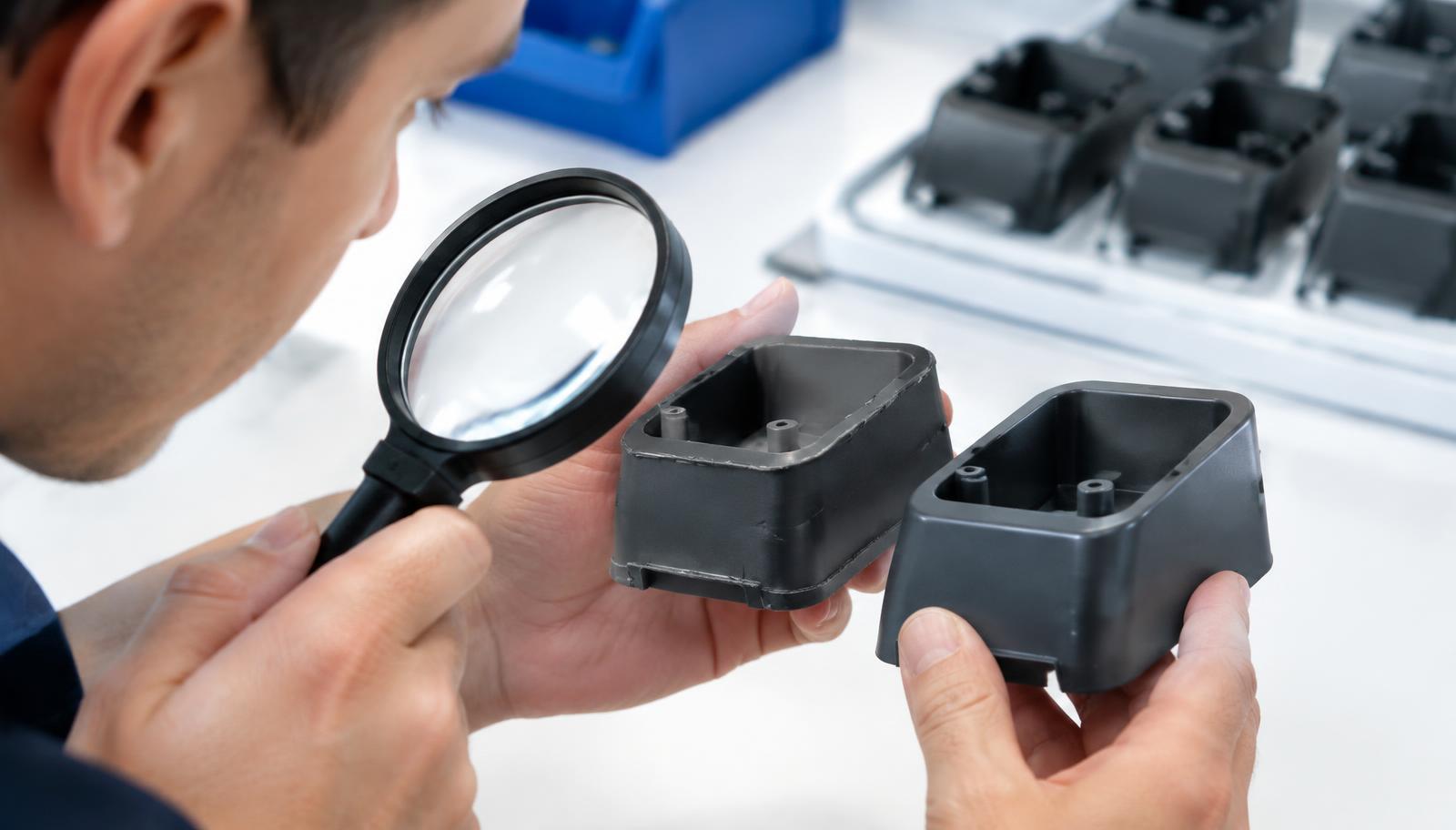
Define Defects Before Production Starts
A manufacturing defect is a failure to meet an agreed requirement, not simply a feature someone dislikes after production. Requirements can concern dimensions, appearance, performance, labeling, or safety. When specifications are vague, buyers and suppliers may judge the same product differently. Prevention therefore begins with measurable acceptance criteria rather than a final inspection appointment.
Create a controlled specification pack containing drawings, material grades, tolerances, approved artwork, and relevant performance requirements. Pair written criteria with approved samples and photographs of acceptable and unacceptable conditions. Identify the current revision and explain which document takes precedence when samples and drawings disagree. Make sure production staff and subcontractors receive the same requirements.
Classify defects as critical, major, or minor using product risk and intended use. A sharp exposed edge on a handled product may require different treatment from a faint cosmetic mark. Agree the classification and disposition rules before placing the order. Commercial acceptance criteria never override mandatory safety obligations.
Surface Defects: Scratches, Stains, and Uneven Finishes
Surface defects include scratches, coating runs, stains, discoloration, and inconsistent texture. They can originate during forming or finishing, but often appear later through poor handling and packing. A clean production line will not prevent damage if finished parts rub against metal fixtures. Trace when a defect first appears instead of automatically blaming the final operator.
Specify the viewing conditions for appearance checks, including lighting, distance, viewing angle, and inspection area. Distinguish highly visible customer surfaces from concealed surfaces without relaxing safety requirements. Use agreed color references and, where needed, instrumental color measurements with defined tolerances. Photographs alone may misrepresent color because cameras and screens vary.
- Inspect components before and after finishing to locate the stage introducing marks.
- Control cleaning, surface preparation, coating parameters, and curing conditions using product-specific work instructions.
- Add suitable trays, separators, protective films, and handling rules; verify that protection does not leave residue.
Dimensional Defects: Warping, Shrinkage, and Poor Fit
Dimensional defects prevent parts from fitting, sealing, stacking, or operating as intended. Causes may include tooling wear, unstable temperatures, material shrinkage, incorrect machine settings, or inconsistent cooling. A dimension can pass individually while the assembled product fails because several tolerances accumulate. Review mating features together rather than treating each drawing as an isolated document.
Identify critical dimensions and specify where, how, and under what conditioning they should be measured. Use calibrated equipment suited to the tolerance and verify that operators use a consistent method. For flexible products, uncontrolled measuring pressure can distort results. Track important dimensions during production so a drifting process is corrected before a large quantity accumulates.
Example
Illustrative example: a lid that will not seat
Illustrative figures: a buyer orders 2,000 storage boxes, and an early check finds that 8 of 50 sampled lids do not seat properly. The supplier traces the problem to uneven cooling after a machine setting change. Production pauses, affected output is segregated, and trial parts are checked against agreed fit and dimensional criteria before restart. The sample finding triggers containment; it does not prove that exactly 16 percent of the entire order is defective.
Material Defects: Wrong Grades, Contamination, and Weakness
Material defects may remain invisible until a product bends, cracks, corrodes, or undergoes laboratory testing. Incorrect resin, unsuitable alloy, excessive moisture, or contamination can undermine an otherwise stable process. A supplier description such as premium material does not establish an enforceable requirement. Specify composition, grade, condition, and any required restricted-substance limits in appropriate technical terms.
Ask how incoming materials are identified, accepted, stored, and linked to production batches. Review supporting documents, but recognize that a material certificate alone may not establish the condition of every delivered item. Use risk-based identity or performance testing when substitution or degradation would create serious consequences. Require written approval before material substitutions, including changes proposed as equivalent.
Storage and preparation deserve the same attention as purchasing. Moisture-sensitive materials may require controlled drying, while coatings or adhesives may have shelf-life and handling restrictions. Separate rejected or unverified stock from released materials. Retain traceable samples when they can help investigate later failures.
Assembly Defects: Missing Parts and Unreliable Connections
Assembly defects include missing fasteners, reversed components, loose connections, poor adhesive bonds, and incorrect wiring. They often arise when work instructions leave room for interpretation or components look too similar. Repeated inspection can detect symptoms, but it does not remove the opportunity for error. Design the workstation and sequence so the correct assembly becomes easier to reproduce.
Use clear visual instructions, identified component bins, and fixtures that prevent reversed orientation where practical. Define validated process settings for fastening, bonding, and joining rather than relying on operator feel. Confirm that torque tools and dispensing equipment are maintained and checked appropriately. Establish first-piece approval after setup changes and functional checks at meaningful stages.
For bonded products, specify surface preparation, adhesive selection, application, and cure requirements together. A joint that looks complete may still lack strength if cure conditions were not met. For electrical assemblies, use qualified personnel and appropriate safety procedures. Select verification methods according to the product and applicable requirements, not a generic checklist.
Packaging and Labeling Defects That Disrupt Delivery
A conforming product can still arrive unsellable because its packaging fails or its labeling is wrong. Common problems include weak cartons, inadequate cushioning, mixed variants, unreadable barcodes, and missing instructions. Treat packaging and labeling as controlled product requirements rather than last-minute artwork tasks. Define the correct unit pack, assortment, carton quantity, and shipping marks.
Approve production-ready artwork and confirm language, product identity, warnings, and destination-specific requirements with competent advisers. Test barcode readability using actual printed packaging rather than a screen image. Where distribution hazards justify it, evaluate packaging using a suitable transport test protocol. Check that any packaging change preserves both product protection and required information.
Prevention checks before order release
- ✓Current specifications, defect classifications, and approved references are acknowledged.
- ✓Incoming material controls and batch traceability are documented.
- ✓Critical process settings, measurement methods, and reaction rules are defined.
- ✓Assembly, function, appearance, and packaging checks have named owners.
- ✓Material, tooling, process, and artwork changes require approval.
- ✓Containment and reinspection responsibilities are agreed before shipment.
Use Inspection Findings to Drive Corrective Action
Inspection provides evidence about sampled products at a particular time; it does not guarantee that every unit conforms. Choose inspection stages according to risk, including incoming checks, early production reviews, and pre-shipment inspection where appropriate. Agree the sampling plan, defect classifications, and acceptance rules in advance. A lot that passes sampling may still contain defects.
- Contain the issue by identifying affected batches and separating suspect stock from released goods.
- Investigate the physical cause and the control failure that allowed the defect to escape detection.
- Implement a corrective action that changes the process, specification, tooling, training, or supplier control as needed.
- Verify effectiveness on subsequent production and document objective results before closing the issue.
Assign Ownership Across the Supply Chain
Prevention works best when buyers, manufacturers, and inspection or testing providers understand their responsibilities. The buyer defines intended use and acceptance needs, while the manufacturer controls production execution. Qualified inspection and laboratory providers supply evidence within their agreed scope. Assign an owner and response deadline to every unresolved quality issue.
Source & Brand coordinates sourcing, OEM/ODM, private label, supplier verification, and logistics with relevant partners. It does not own factories, issue inspection certificates, or act as a customs broker. Buyers can use coordinated supplier communication to keep requirements, inspection arrangements, and corrective actions aligned. Release decisions should remain grounded in documented evidence and applicable obligations.
Keep reference samples for borderline defects as well as clear failures. When inspectors disagree about a scratch or color variation, a signed acceptance example is often more useful than a vague instruction to ensure good appearance. Track recurring defects by production operation and material lot.
Frequently asked questions
What is the difference between a defect and a root cause?
A defect is the observed failure to meet a requirement, such as a cracked housing. The root cause explains why it occurred, such as unsuitable material drying, and should be supported by evidence rather than assumption.
Can final inspection prevent manufacturing defects?
Final inspection can detect some defects before shipment, but the products have already been made. Prevention requires earlier controls over specifications, materials, equipment, and assembly processes.
Should every cosmetic defect cause rejection?
Not necessarily; disposition depends on agreed appearance criteria, defect classification, and acceptance rules. A cosmetic description must not be used to minimize a condition that affects safety or essential performance.
When should a buyer request laboratory testing?
Request testing when relevant characteristics cannot be reliably verified through routine inspection or when regulations require suitable evidence. Examples include material composition, restricted substances, and defined durability or electrical safety properties.
What should happen after defective goods are reworked?
Verify the rework against written criteria and check that it has not created new problems. Keep affected quantities traceable and reinspect or retest as appropriate before approving release.
Key takeaway
Preventing manufacturing defects requires clear requirements, stable processes, and fast corrective action when evidence shows a problem. Connect inspection findings to accountable process changes instead of relying on final sorting to protect every shipment.