
Separate beauty accessories by use and risk
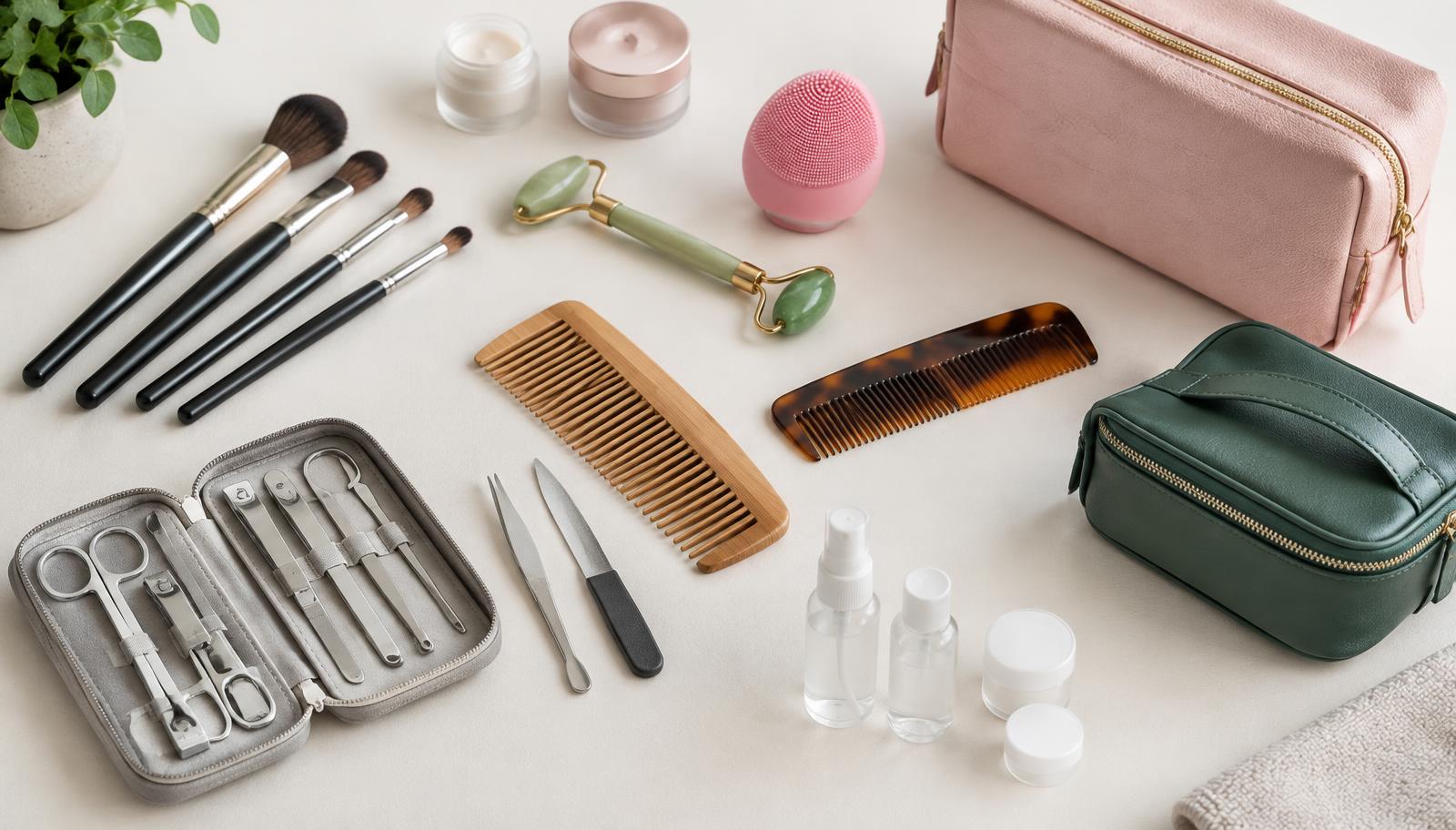
Beauty tools and personal care accessories include brushes, sponges, tweezers, manicure implements, rollers, and powered styling devices. Their shared retail category can obscure very different material, hygiene, electrical, and injury risks. Begin by defining how the product contacts the body, who will use it, and whether it is intended for home or professional use.
Write down the intended function and every claim planned for the listing or package. Exfoliating, massaging, heating, and treating a medical condition are not interchangeable descriptions. Claims and design can affect classification, so resolve uncertainty with qualified advisers before placing an order or approving promotional artwork.
Separate ordinary accessories from cosmetics, medical devices, or other regulated products where relevant. A kit containing a tool and a liquid may create obligations for both components. Define each destination market, because a product’s acceptable labeling and regulatory route may differ between countries.
Build specifications around contact materials and cleaning
A sourcing specification should identify materials at the level needed to control performance and risk. For brushes, describe fiber type, density, ferrule construction, adhesive, handle finish, and shedding limits. For metal implements, define the alloy or grade, surface finish, tip geometry, alignment, and corrosion resistance rather than accepting premium steel as a specification.
Map skin contact, potential contact with eyes or lips, and exposure to water, oils, alcohol, or cleaning products. Ask suppliers for material information and identify where chemical testing is appropriate for the destination and intended use. Natural, hypoallergenic, antibacterial, and similar claims need a defensible basis rather than supplier reassurance.
Specify whether the product is single-use or reusable and how consumers should clean, dry, and store it. Validate that the proposed cleaning instructions do not loosen adhesives, distort foam, damage coatings, or leave inaccessible moisture traps. Do not promise sterilization or disinfection performance without suitable evidence for the stated process.
Verify production capability and control outsourcing
Confirm the supplier’s legal identity and the factory or workshops responsible for molding, assembly, polishing, coating, and packing. A business that assembles kits may buy its tools from several other manufacturers. That model can work, but only if responsibility and traceability remain clear across the supply chain.
- Review capabilities against the actual product, including precision finishing, material handling, and clean storage where relevant.
- Ask which processes are subcontracted and require approval before changing material sources or production locations.
- Examine incoming checks, in-process controls, defect records, and corrective-action examples without treating a certificate as complete proof.
- Confirm that purchase orders, approved samples, inspection records, and batch codes can be linked after delivery.
For OEM/ODM work, distinguish an existing design with branding changes from a newly developed product. Establish ownership of molds, artwork, and design files, plus the right to use any supplied designs. Source & Brand coordinates supplier verification and development work; it does not own factories or guarantee a supplier’s future performance.
Evaluate samples with repeatable performance tests
Assess samples against a written scorecard covering function, appearance, durability, and user handling. For a tweezer, test tip alignment, gripping consistency, sharp edges, and corrosion resistance under defined conditions. For a makeup brush, evaluate shedding, ferrule retention, finish transfer, and performance after the specified cleaning cycles.
- Compare initial samples from shortlisted suppliers using the same methods, lighting, and reference materials.
- Document failures with photographs and measurements, then require revised samples where the design or process changes.
- Approve a production-intent sample made with the intended materials, finish, assembly method, and branding.
- Agree inspection procedures, defect severity, sample sizes, acceptance rules, and escalation for safety concerns.
User trials can reveal awkward grips or confusing instructions, but they do not replace technical safety assessment. Heated or powered tools need additional evaluation of electrical, thermal, mechanical, and other applicable risks. Use qualified testing support for regulated questions and keep test conditions tied to the final configuration.
Protect hygiene and make packaging claims defensible
Define the cleanliness needed for the product and its intended use instead of requesting vaguely hygienic production. Agree handling practices, storage conditions, packaging controls, and methods for checking visible contamination. Sterile packaging is a specific claim that requires an appropriate validated process, not simply a sealed pouch.
Choose packaging that protects working surfaces and prevents movement, abrasion, and crushing during distribution. Keep pointed or sharp ends away from accessible package openings, and consider how shoppers will remove the item safely. If a tamper feature is required, describe exactly what evidence of opening it should provide.
Review every package panel for consistent product names, warnings, responsible-party information, and required language. Avoid medical, antimicrobial, environmental, or material claims that the evidence does not support. Private-label artwork approval should include a documented check against the specification, not only a visual review of colors and logo placement.
Compare complete costs and realistic order quantities
Ask suppliers to separate product, decoration, tooling, inserts, retail packaging, and testing costs. Confirm whether minimum quantities apply to the finished item, a custom color, a printed box, or each component of a kit. A low unit quote can conceal unused packaging inventory or a substantial tooling commitment.
Example
Illustrative sourcing scenario
Illustrative figures: a buyer plans 3,000 brush sets with a quoted product cost of $2.60 per set. Custom boxes add $0.35 each, and a $600 tooling charge adds $0.20 per set if allocated across this order. The resulting $3.15 subtotal still excludes freight, duties, taxes, inspections, and any required testing, so it is not a landed cost.
Negotiate payment milestones against clearly defined deliverables, particularly when tooling or custom finishes are involved. State the Incoterms rule, named place, currency, delivery window, and remedies for nonconforming goods. Confirm arrangements for surplus branded packaging and defective stock so rejected items do not reappear through uncontrolled sales channels.
Approve production and shipment with a release checklist
Set quality expectations before production rather than asking an inspector to invent them at the end. Define unacceptable contamination, loose parts, sharp edges, tip defects, cosmetic variation, and branding errors as appropriate. Some critical findings may require rejection or additional investigation regardless of ordinary cosmetic acceptance levels.
Pre-shipment release checklist
- ✓Final materials, dimensions, finishes, and approved reference samples match the purchase order.
- ✓Applicable technical evidence and claim substantiation cover the final product and destination market.
- ✓Cleaning instructions, warnings, languages, and responsible-party details are approved.
- ✓Inspection findings are resolved, with rework independently rechecked when appropriate.
- ✓Retail packs, protective features, carton markings, and batch identifiers meet the agreed specification.
- ✓Invoice, packing list, origin information, and shipping arrangements have been checked with the relevant logistics partners.
Arrange inspection early enough to leave time for corrective action and consider transport testing for fragile formats. An inspection report describes findings within its agreed scope; it is not a universal product safety certificate. Source & Brand can coordinate inspection and logistics, but does not issue inspection certificates or act as a customs broker.
Build a feedback loop for repeat orders
Record complaints and returns by batch, defect type, usage conditions, and sales channel. Distinguish manufacturing failures from unclear instructions or unsuitable product claims before deciding on corrective action. Escalate potential injuries or safety defects promptly through an established response process, including specialist advice about reporting or withdrawal obligations.
Review replenishment samples whenever materials, colors, adhesives, coatings, or production sites change. Even a small aesthetic adjustment can affect durability, chemical evidence, or cleaning performance. Keep a change log connecting approvals to purchase orders so a repeat order is genuinely the same controlled product, not merely the same catalog number.
Source & Brand supports sourcing, OEM/ODM, private label, supplier verification, and logistics coordination. Define decision rights clearly between your team, the supplier, laboratories, inspectors, and logistics providers. Coordination works best when evidence and approvals are visible before commercial deadlines create pressure to ship.
Frequently asked questions
Are beauty tools regulated like cosmetics?
Not automatically; classification depends on the product, intended purpose, claims, and destination. A tool sold alongside a cosmetic may have different obligations from the formulation, so assess each component and the complete kit.
How can I check a hypoallergenic claim?
First establish what the claim means for the product and market, then obtain appropriate supporting evidence. Material names or a supplier declaration alone may not justify broad promises about every user’s reaction.
Should reusable tools be advertised as sterilizable?
Only when the claimed process and product durability have suitable validation. If that evidence is unavailable, give accurate cleaning and care instructions without implying sterility or unsupported infection-control performance.
Can I use the same specification for every color?
Use a shared base specification where appropriate, but identify color-specific pigments, coatings, and materials. Assess whether those differences affect chemical requirements, color transfer, durability, or existing test coverage.
What matters most when moving from samples to production?
Lock the materials, construction, approved reference, and measurable acceptance criteria before authorizing production. Require written change approval and connect inspection findings to the actual batch rather than relying on the original sample.
Key takeaway
Source beauty tools around intended use, controlled materials, and repeatable performance checks. Combine those controls with defensible claims, suitable packaging, and traceable production records before scaling private-label orders.